Compare Dover – Calais Ferry Prices

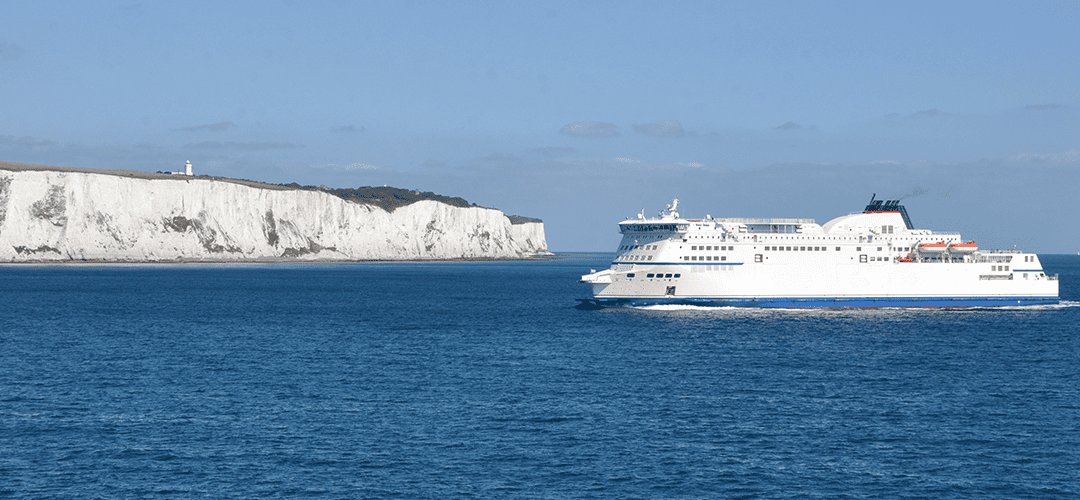
Car Ferry arriving at Dover UK with the wight cliffs of dover in the backgroundCompare Dover – Calais Ferry Prices

For those in the South of England, the English Channel ferry routes between Dover and Calais are a convenient way of reaching France, Belgium, Holland, Germany and other European countries further afield.

There are a choice of routes and ferry operators  – Dover to Calais and Dover to Dunkirk.

Search Prices & Offers »


Car Ferry arriving at Dover UK with the wight cliffs of dover in the background

Car Ferry arriving at the Port of Dover.

Compare Dover - Calais & Dunkirk Ferry Prices

Taking around 90 minutes and with over 40 crossings a day, it’s quick and easy and you’re sure to find a crossing time to suit your travel plans.

If time is at a premium, the Eurotunnel between Folkestone and Calais will speed you under the Channel in just 35 minutes.

Dover – Calais

  • Ferry operators: DFDS, P&O Ferries, Irish Ferries
  • Duration: 90 minutes
  • Over 40 crossings a day

Dover – Dunkirk (Dunkerque)

  • Ferry operator: DFDS
  • Duration: 2 hours
  • 12 crossings a day

Folkestone – Calais

  • Operator: Eurotunnel
  • Duration: 35 minutes
  • 22 crossings a day

* Crossing times and frequency correct at the time of writing.

Line of cars waiting to board the car ferry from Dover to Calais.Dover – Calais

  • Ferry operators: DFDS, P&O Ferries, Irish Ferries
  • Duration: 90 minutes
  • Over 40 crossings a day

Dover – Dunkirk (Dunkerque)

  • Ferry operator: DFDS
  • Duration: 2 hours
  • 12 crossings a day

Folkestone – Calais

  • Operator: Eurotunnel
  • Duration: 35 minutes
  • 22 crossings a day

* Crossing times and frequency correct at the time of writing.

Row of cars waiting to board the car ferry from England to Holland
Search Prices & Offers »

Dover to Calais/Dunkirk Ferry FAQs

Where is the ferry terminal at Dover?

The Port of Dover ferry terminal is located just off the A20 in Dover. By car, follow the boat signs to the ‘Eastern Docks’ – all three operators, P&O, DFDS and Irish Ferries, are found here. Use postcode CT16 1HZ for your sat nav. For foot passengers arriving by public transport, Dover Priory train station is just over 1 mile from the port.

Port of Dover – View Larger Map

Where is the ferry terminal at Calais?

The Calais ferry terminal (Port Boulogne) can be found just outside of Calais on the N216. From the main A16/E40 motorway, looks for the green signs to ‘Calais Port – Car Ferry’. Again, all three ferry operators can be found here. The entrance for foot passengers is by the ‘Cousteau’ bus stop and the free Balad’in shuttle bus runs from the centre of Calais to here roughly every 12-20 minutes.

Port of Calais – View Larger Map

Where is the ferry terminal at Dunkirk (Dunkerque)?

The DFDS terminal is located just to the West of Dunkirk. The address is Terminal Car Ferry, Port 5670, Rte de la Maison Blanche, 59279 Loon-Plage, France. There are white ‘Car Ferry’ signs on the exit from the main A16/E40 motorway.

DFDS Dunkirk Ferry Terminal – View Larger Map

How soon do you have to check in for the ferry?

Check in times vary, from 45 minutes up to 90 minutes before the sailing. Check with your ferry operator for their specific minimum arrival time at the port.

What are the Duty Free allowances when travelling between England and France?

Personal allowances for alcohol and tobacco when travelling to mainland Europe are much lower than they used to be when the UK was a member of the European Union. According to the UK Goverment website, you are currently allowed to bring the following into the UK without paying import VAT or duty:

  • 200 cigarettes or 250g tobacco
  • 18 litres of wine (24 bottles)
  • 42 litres of beer

Other Ferry Routes to France

Although the Dover to Calais and Dunkirk routes are the most popular, and busy, there are many other alternative ferry routes between the South of England and France. Depending on your destination, these routes can be quicker, more convenient and make for a more relaxing journey.

  • Portsmouth to Caen
  • Portsmouth to Cherbourg
  • Plymouth to Roscoff
  • Newhaven to Dieppe
  • Portsmouth to St Malo

Quickly compare prices and offers on these and alternative routings to see how much you can save!

Cars waiting to board a ferryOther Ferry Routes to France

Although the Dover to Calais and Dunkirk routes are the most popular, and busy, there are many other alternative ferry routes between the South of England and France. Depending on your destination, these routes can be quicker, more convenient and make for a more relaxing journey.

  • Portsmouth to Caen
  • Portsmouth to Cherbourg
  • Plymouth to Roscoff
  • Newhaven to Dieppe
  • Portsmouth to St Malo

Quickly compare prices and offers on these and alternative routings to see how much you can save!

Auto's staan in de rij te wachten om aan boord te gaan van een veerboot voor de overtocht naar Engeland.

Driving in France? – Know the Requirements

It’s a legal requirement in France and many other European countries to carry a number of items of safety equipment in your car with you. There can be very hefty fines (sometimes on the spot) if you’re stopped by the Police and you don’t have these items in your car.

  • Reflective jackets for the driver and all passengers. These should be accessible from inside the vehicle.
  • Red warning triangle
  • Registration plate country identifier
  • Headlamp beam deflectors
  • Spare bulb kit – this is recommended rather than mandatory
  • First aid kit – again, a recommendation

Driving in France? – Know the Requirements

Woman wearing reflective jacket and red triangle on the road following a car breakdown

In France, it is a legal requirement to have reflective jackets and other items of safety equipment in your car.

It’s a legal requirement in France and many other European countries to carry a number of items of safety equipment in your car with you. There can be very hefty fines (sometimes on the spot) if you’re stopped by the Police and you don’t have these items in your car.

  • Reflective jackets for the driver and all passengers. These should be accessible from inside the vehicle.
  • Red warning triangle
  • Registration plate country identifier
  • Headlamp beam deflectors
  • Spare bulb kit – this is recommended rather than mandatory
  • First aid kit – again, a recommendation
Woman wearing reflective jacket and red triangle on the road following a car breakdown

A breakdown is inconvenient at the best of times and could be a nightmare if you’re stuck at the side of the road in a foreign country.